The Leader Who Helped America Win by Refusing to Quit

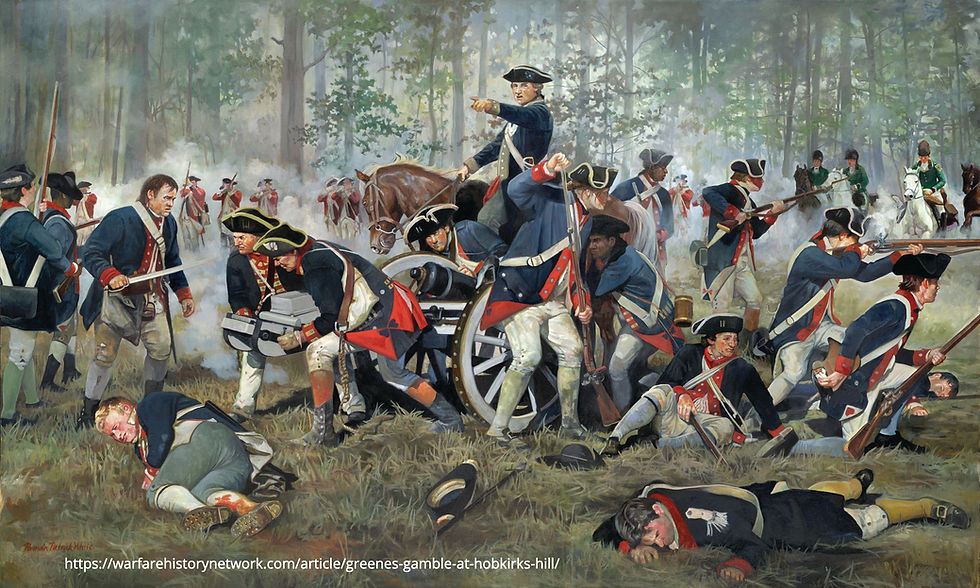
When we talk about America’s 250th birthday, the names usually come quickly.
George Washington. Thomas Jefferson. Benjamin Franklin. John Adams. Samuel Adams.
And they should.
But there is another name that belongs in the conversation. Not because he was the loudest. Not because he was the most famous. Not because he always won the battlefield in front of him.
His name was Nathanael Greene.
And if we are honest about what it takes to win, Greene’s story may be one of the best leadership lessons the American Revolution gives us.
Greene was not born into military greatness. He was a Rhode Island foundry owner, raised in a Quaker family, with no formal military training. He also had a limp, which would have made him an unlikely picture of a soldier. But leadership has never been about how someone looks standing still. Leadership is revealed when pressure starts moving.
And Greene could lead.
When the Revolution began, he helped raise a militia company and entered the fight. His ability was recognized quickly. Over time, he became one of George Washington’s most trusted officers. That matters, because Washington was not simply looking for brave men. He needed dependable men. He needed people who could carry responsibility without needing constant applause.
That is one of the first lessons from Greene’s life.
Real leadership is not built on title. It is built on trust.
Greene proved himself in the field, but he also proved himself in one of the least glamorous jobs in the army: supply. After the terrible winter at Valley Forge, the Continental Army needed more than speeches. It needed food, clothing, organization, and a supply system that could keep men in the fight.
Washington asked Greene to become Quartermaster General.
Greene did not want the job. Most leaders would rather be seen in the moment of action than buried in the work nobody notices. But armies do not survive on inspiration alone. They survive on execution. They survive because someone makes sure the right things get to the right people at the right time.
Greene took the assignment and reorganized the department. He improved a broken system. He dealt with shortages, politics, and pressure. And like most leaders who actually fix problems, not everyone liked how he did it. His methods frustrated some in Congress, and when Congress refused him a vote of confidence, Greene resigned from that role. Not the first, or the last, time Congress will have no clue what they are doing.
That part of his story should not be missed.
Sometimes leadership means taking on the necessary work even when it is not glamorous. Sometimes it means making changes that make people uncomfortable. And sometimes it means realizing that the people above you may like the idea of improvement more than they like the cost of improvement.
That is still true today.
Everybody wants better results until better results require different decisions.
Then came the South.
By 1780, the American cause in the southern colonies was in deep trouble. Charleston had fallen. Camden had been a disaster. Much of the southern Continental Army had been wrecked. British confidence was high, and Patriot morale was low. This was not a clean assignment. This was not taking over a winning team with momentum.
This was walking into a mess.
Washington recommended Greene to take command of the Southern Army. Washington described him as a man of ability, fortitude, and integrity. That is not small praise. Washington knew Greene was stepping into a situation filled with disadvantage, limited resources, and confusion.
That is where leaders are truly tested.
Anybody can lead when the numbers are good, the team is rested, and the plan is obvious. But Greene inherited something far harder. He inherited exhaustion. He inherited uncertainty. He inherited an army that could not afford many mistakes.
And then Greene made one of the boldest decisions of the war.
He split his army.
That went against the conventional military wisdom of the day. Most leaders are told to concentrate strength, avoid unnecessary risk, and keep control tight. Greene saw the situation differently. He knew the South could not be saved by standing still and waiting for perfect conditions. His forces needed mobility. They needed to stretch the British. They needed to make Cornwallis chase, react, and burn energy.
That is where leadership often separates itself from management.
Management protects the current structure.
Leadership asks what the mission requires.
Greene placed Daniel Morgan in command of one division, and that decision helped set up the Patriot victory at Cowpens. The British suffered severe losses there. Cowpens did not end the war by itself, but it changed momentum. It proved the British could be beaten in the South. It lifted Patriot confidence. It weakened British strength. It became part of the chain of events that moved the war toward Yorktown.
Greene’s genius was not that he won every fight. He did not.
His genius was that he understood the difference between losing a battle and losing the mission.
At Guilford Courthouse, Greene’s army fought Cornwallis in a battle that technically ended with a British victory. But it was the kind of victory that bleeds the winner. The British lost men they could not easily replace. Their army was weakened. Their campaign became harder. The cost of holding the South kept rising.
That is the part many people miss.
Greene was playing the long game.
He was not leading for headlines. He was leading for the outcome.
That kind of leadership takes maturity. It takes self-control. It takes the ability to withstand criticism from people who only understand the scoreboard at halftime. Some people want leaders to look strong in every moment. Greene understood that real strength is sometimes found in restraint, patience, movement, and timing.
He did not need to win every mile.
He needed to wear the British down.
And he did.
His strategy disrupted British logistics, pressured their posts, kept American resistance alive in the South, and helped create the conditions that led to the final American victory at Yorktown. The National Park Service states that Greene’s conduct in the South “broke the back of the British war effort in America.”
That is a remarkable statement.
It also tells us something important about America’s founding.
The Revolution was not won by courage alone. It was not won by one speech, one signature, one battle, or one general. It was won by people who kept showing up when the outcome was not guaranteed. It was won by leaders who carried responsibility through mud, hunger, politics, disagreement, and fear.
Nathanael Greene was one of those leaders.
His life reminds us that leadership is not always about being the most visible person in the room. Sometimes it is about being the most reliable. Sometimes it is about doing the work nobody wants to do. Sometimes it is about making the decision nobody else understands yet.
That last part matters.
There are moments when a leader has to take a chance. Not a reckless chance. Not an ego-driven chance. A responsible chance.
There is a difference.
Recklessness ignores consequences.
Leadership weighs the consequences and still acts because standing still would cost more.
Greene’s decision to divide his army was risky. His willingness to fight a war of movement, pressure, and endurance was risky. His approach did not always look like victory in the moment. But leadership is not judged only by how clean it looks today. Leadership is judged by whether it moves people toward the mission.
That is true in war.
It is true in business.
It is true in families.
It is true in communities.
It is true in government. It's time our governments (local, state, and federal) get back to understanding they work for "We the People..."
The easy thing is to wait until everyone agrees. The easy thing is to protect your position. The easy thing is to avoid criticism. But America was not built by people who only did the easy thing. It was built by people who understood that responsibility often requires courage before approval arrives.
Nathanael Greene deserves to be remembered during America 250 because he represents the kind of leadership every generation needs.
Not loud leadership.
Not celebrity leadership.
Not leadership obsessed with credit.
But steady, mature, human-centered leadership.
The kind that sees the people, understands the pressure, studies the situation, makes the hard call, and keeps going.
As America turns 250, we should remember Greene not only because of what he did for the Revolution, but because of what he teaches us now.
Leadership is deceptively simple.
Simple does not mean easy.
Greene took a broken situation and helped turn it toward victory. He did not do it by pretending the problems were small. He did it by facing reality, trusting people, taking calculated risks, and refusing to quit when quitting would have been easier.
That is leadership.
And America needed it then.
We still need it now.